About 177 minutes
The Nightriders' Feud — Story, Setting & Ideas
Fantasy Juvenile Worlds
40,546 recorded words. 0 minutes difference from this book's estimate.
View Gutenberg source #33829
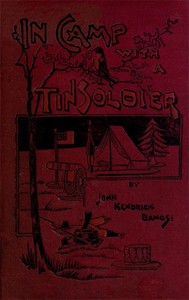
The source record for In Camp With A Tin Soldier — Background and Themes measures this digital text at 40,497 words, 2 hr 57 min estimated reading time, and 6 detected text sections.
The text analysis averages about 17.0 words per sentence, while the detected sections provide another way to judge how the source is divided.
Project Gutenberg metadata also associates the work with “Fantasy literature,” connecting these edition facts with the source record’s subject description.
Explore this collection
These alternatives are selected using recorded categories and estimated reading time.
About 177 minutes
Fantasy Juvenile Worlds
40,546 recorded words. 0 minutes difference from this book's estimate.
View Gutenberg source #33829About 172 minutes
Fantasy Juvenile Worlds
39,524 recorded words. 5 minutes difference from this book's estimate.
View Gutenberg source #29774About 167 minutes
Fantasy Juvenile Worlds
38,349 recorded words. 10 minutes difference from this book's estimate.
View Gutenberg source #33432Search stored excerpts and compare books → Choose by your preferences →
Choices use stored catalog measurements. Estimates vary with reading speed. A shared category is a catalog label, not a claim that two books have the same argument or literary quality.
Search reads excerpt text stored with this catalog and links to its associated Gutenberg record. The connection is stored in the site database; this tool does not recheck that every excerpt is word-for-word identical to that external record. Excerpt search does not cover every chapter and does not verify historical publication dates.
Catalog snapshot checked: 2026-09-25. Coverage: 94 public books, 94 available source excerpts.
Read the complete public-domain text at its original source.
Read on Project GutenbergThe story begins with a sharp contrast: the nursery, where Jimmieboy hears a drum and his mother calmly knits socks, versus the imagined military adventure. The opening dialogue—"What's that?" and "What's what?"—establishes a pattern of miscommunication between the boy's vivid inner life and the adult world's mundane explanations. Mamma's practical concerns (naps, birthday cakes) ground the fantasy, while Jimmieboy's questions about age and candles reveal a child's logic. This domestic frame sets the stage for the later transition into a realm where a tin soldier, a sprite, and a giant named Fortyforefoot operate by their own rules.
The first chapter anchors the story in recognizable routines: a missed nap, a birthday dinner, and a mother knitting socks. Jimmieboy's confusion about his father's age—"Is papa six years old to-day?"—shows how the narrative uses a child's perspective to question adult certainties. The drum sound that only Jimmieboy hears is the first hint of a permeable boundary between reality and imagination. This opening strategy invites readers to accept that the adventure will emerge from ordinary domestic life, not from a separate fantasy realm. The mother's gentle skepticism ("I guess you imagined it") does not dismiss the boy's experience but leaves room for the story to unfold.
Once Jimmieboy meets Major Blueface, the narrative shifts to a world governed by its own logic. The major's self-praise—"Brave as a lobster, witty as a porcupine"—uses absurd comparisons that amuse rather than threaten. His tale of being hit by dried pease from a cannon and then thanking the enemy parodies military honor. The sprite's offer to show "the most wonderful things you ever saw" introduces a guide figure who mediates between Jimmieboy and the fantastical. The dialogue is full of puns and mock-heroic speeches, as when the major recites a poem about quarreling. These elements reward readers who enjoy wordplay and gentle satire of adult conventions.
The sprite proposes two destinations: the giant Fortyforefoot and Alltart's bakery. Jimmieboy's fear—"They eat little boys like me"—is met with the sprite's reassurance and a promise of safety. This pairing of danger and comfort is a recurring pattern. The bakery, where one can wish for any cake and have it instantly, offers a counterbalance to the giant's threat. The narrative does not resolve this tension immediately; instead, it lets the reader wonder which location will be visited first. The sprite's claim that "all things come to him who waits" suggests a leisurely pace, encouraging readers to enjoy the journey rather than rush to a conclusion.
The excerpts rely heavily on dialogue to advance the plot and reveal character. Jimmieboy's questions are natural and childlike; the major's speeches are pompous and self-congratulatory; the sprite is wry and confident. This vocal variety keeps the narrative lively. The structure alternates between domestic scenes (the nursery) and fantastical encounters (the tin soldier's camp). Readers should note how the author uses chapter titles like "The Start" and "Jimmieboy Receives His Orders" to create a military framework for what is essentially a playful adventure. The story does not explain how Jimmieboy travels between worlds, leaving that transition as a given of the fantasy genre.
Readers approaching this book for the first time will benefit from paying attention to the rhythm of the dialogue and the way each character speaks in a distinct voice. The fantasy elements are never fully explained, which is part of their charm. The story rewards those who enjoy wordplay, gentle satire, and a child's-eye view of the world. Treat the chapters as episodes rather than a tightly plotted novel, and let the humor carry you through.
I keep returning to that passage in In Camp With A Tin Soldier where the nursery’s ordinary shadows turn soldier-shaped, and it reminds me of another quiet hinge—the way domestic interiors in Vera — Text and Context hold their own unseen war. Both books let a familiar room breathe differently, almost without noticing. I think of them together, like two photographs of the same window at different hours.
Answer a few questions and save a private reflection on this device.