About 297 minutes
Happy House — Inside the Classic
Fantasy Juvenile Worlds
68,185 recorded words. 10 minutes difference from this book's estimate.
View Gutenberg source #32053
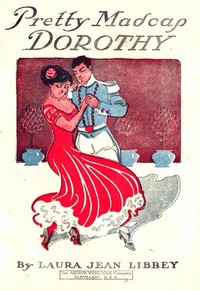
The source record for Pretty Madcap Dorothy; Or, How She Won a Lover — Inside the Classic measures this digital text at 70,505 words, 5 hr 7 min estimated reading time, and 8 detected text sections.
The text analysis averages about 17.1 words per sentence, while the detected sections provide another way to judge how the source is divided.
Project Gutenberg metadata also associates the work with “Women employees -- New York (State) -- New York -- Fiction,” connecting these edition facts with the source record’s subject description.
Explore this collection
These alternatives are selected using recorded categories and estimated reading time.
About 297 minutes
Fantasy Juvenile Worlds
68,185 recorded words. 10 minutes difference from this book's estimate.
View Gutenberg source #32053About 317 minutes
Fantasy Juvenile Worlds
72,908 recorded words. 10 minutes difference from this book's estimate.
View Gutenberg source #33985About 281 minutes
Fantasy Juvenile Worlds
64,521 recorded words. 26 minutes difference from this book's estimate.
View Gutenberg source #31773Search stored excerpts and compare books → Choose by your preferences →
Choices use stored catalog measurements. Estimates vary with reading speed. A shared category is a catalog label, not a claim that two books have the same argument or literary quality.
Search reads excerpt text stored with this catalog and links to its associated Gutenberg record. The connection is stored in the site database; this tool does not recheck that every excerpt is word-for-word identical to that external record. Excerpt search does not cover every chapter and does not verify historical publication dates.
Catalog snapshot checked: 2026-09-25. Coverage: 94 public books, 94 available source excerpts.
Read the complete public-domain text at its original source.
Read on Project GutenbergLaura Jean Libbey opens Pretty Madcap Dorothy with a debate among book-bindery girls about the romantic prospects of working women. Nadine Holt declares it "hard for working-girls to get acquainted" and that they "might just as well give up forever all hopes of a lover." Dorothy Glenn counters with a belief in fate: "if fate has any lover in store for a girl, that he will be sure to just happen to come where she is." This exchange immediately establishes the novel's central tension between pragmatic despair and romantic idealism, rendered through colloquial, breathless dialogue that marks each speaker's personality.
Libbey's dialogue is peppered with period-specific colloquialisms that ground the story in its 1890s New York setting. Dorothy uses phrases like "put in your oar" and "so there!" which convey her youthful impudence. The girls refer to dance partners as "ninny" and complain about those who "stand away off, and barely touch your finger-tips." Such language is not merely decorative; it distinguishes social class and character. Nadine speaks with a sharper, more cynical edge—"with a curl of her red lip"—while Dorothy's voice is described as "shrill but very sweet." Libbey consistently attaches physical descriptors to speech tags, making the act of speaking a visual and emotional cue.
A key structural device is the overheard conversation. Dorothy, now blind, sits on a piazza and unintentionally listens to two girls discussing her fiancé Harry Kendal's infatuation with Iris Vincent. The gossip is rendered in direct dialogue, with phrases like "it is the talk of the ball-room" and "nine lovers out of ten fly from her." Libbey uses this eavesdropping to deliver exposition and emotional blow simultaneously. The girls' casual cruelty—"could you really blame Harry Kendal if he were to break off with Dorothy?"—is contrasted with Dorothy's silent reaction: "the great cry that had been choked back so long burst forth." The scene relies on the reader's awareness that Dorothy is present, creating dramatic irony.
Libbey often withholds elaborate description at moments of high emotion, instead relying on simple, physical actions. When Dorothy overhears the gossip, the text notes she "sank down upon a seat" and later "rose from her chair, and the look on her face was terrible to behold." The interiority is conveyed through gesture rather than introspection. Similarly, her sobbing is described as "wringing her cold little hands and clutching them tightly over her heart." These choices prioritize external, visible signs of distress over internal monologue, aligning with the novel's melodramatic mode while keeping the prose brisk and accessible.
The book-bindery and the ballroom serve as contrasting settings that Libbey uses to define character and conflict. The bindery is a space of female camaraderie and economic necessity, where girls debate marriage prospects while working. The ballroom, by contrast, is a realm of social performance, where "dance-music" drowns out Dorothy's anguish. Libbey emphasizes the physical details of these spaces: the "window-ledge" where Dorothy sits, the "vine-wreathed, fluted pillars" of the piazza. These are not merely backdrops but active elements in the narrative—the piazza's "dense shadow" conceals Dorothy, enabling the eavesdropping scene. The settings thus function as both realistic milieus and symbolic arenas for the novel's romantic and social tensions.
Libbey's prose rewards attention to its small, deliberate choices: the way a character's voice shifts from banter to bitterness, the placement of a listener in shadow, the use of a single gesture to convey heartbreak. Readers attuned to these details will find a work that, while formulaic in plot, demonstrates a consistent craft in its handling of dialogue and emotional staging. The novel is best approached as a period artifact of popular fiction, where the author's skill lies not in originality but in the precise execution of familiar conventions.
Flipping through Pretty Madcap Dorothy, I paused on Libbey’s knack for breathless, overheard dialogue—it reminded me, oddly, of the quieter hush inside Happy House — Inside the Classic. Both feel like rooms where every word carries weight, though one shouts and the other whispers. Strange, how a working girl’s chatter can echo a home’s silence.
Answer a few questions and save a private reflection on this device.