About 41 minutes
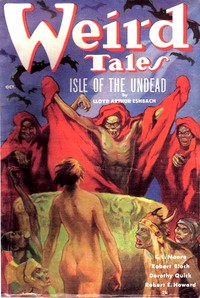
Death Makes a Mistake — Edition Insights
Fantasy Juvenile Worlds
9,256 recorded words. 2 minutes difference from this book's estimate.
View Gutenberg source #32880
The source record for The Medici Boots — A Reader’s Guide measures this digital text at 8,819 words, 39 min estimated reading time, and 1 detected text section.
The text analysis averages about 17.1 words per sentence, while the detected sections provide another way to judge how the source is divided.
Project Gutenberg metadata also associates the work with “Short stories,” connecting these edition facts with the source record’s subject description.
Explore this collection
These alternatives are selected using recorded categories and estimated reading time.
About 41 minutes
Fantasy Juvenile Worlds
9,256 recorded words. 2 minutes difference from this book's estimate.
View Gutenberg source #32880About 53 minutes
Fantasy Juvenile Worlds
12,115 recorded words. 14 minutes difference from this book's estimate.
View Gutenberg source #32831About 118 minutes
Fantasy Juvenile Worlds
27,069 recorded words. 79 minutes difference from this book's estimate.
View Gutenberg source #28008Search stored excerpts and compare books → Choose by your preferences →
Choices use stored catalog measurements. Estimates vary with reading speed. A shared category is a catalog label, not a claim that two books have the same argument or literary quality.
Search reads excerpt text stored with this catalog and links to its associated Gutenberg record. The connection is stored in the site database; this tool does not recheck that every excerpt is word-for-word identical to that external record. Excerpt search does not cover every chapter and does not verify historical publication dates.
Catalog snapshot checked: 2026-09-25. Coverage: 94 public books, 94 available source excerpts.
Read the complete public-domain text at its original source.
Read on Project GutenbergThe story opens with a precise, almost clinical description of the Medici boots: "creamy leather, pliable as a young girl's hands," threaded with silver and set with amethysts. This attention to material detail recurs throughout, grounding the supernatural threat in a tangible object. The narrative moves from the museum where the boots lay under glass for fifty years to the private collection of old Silas Dickerson, who dies with the boots on his lap. The transition from public display to intimate possession sets up the central conflict between rational inheritance and irrational danger.
Silas Dickerson's note to his nephew John is the story's first explicit statement of danger: the boots must be "destroyed or be put for ever under glass." The three young Delameters—John, his wife Suzanne, and his twin brother Eric—read the note with "tolerant" smiles, dismissing the old man's fears as incomprehensible. This generational divide between superstitious past and modern rationality is established quickly. The boots, however, are not destroyed. Instead, they are brought into the Delameters' home, where Suzanne becomes fascinated with them. The narrative uses the will as a structural pivot: the warning is given, ignored, and the consequences begin to unfold.
When Suzanne first appears wearing the boots, her demeanor shifts dramatically. She speaks in a "staccato voice" and her words seem "translated from a foreign tongue." She ignores her husband John's affectionate teasing and instead directs an "open caress" toward Eric. The change is not gradual but immediate, marked by specific gestures: she "snatched away her hand" from John and leaned toward Eric. The narrative emphasizes her altered physicality—"red-lipped and heavy-lidded beauty" carrying a "power more devastating than the darting lightning." Eric, the doctor, begins to suspect that the woman before him is "not the Suzanne they knew." The transformation is tied directly to the boots, which she wears as a deliberate choice.
The dinner scene is the story's most concentrated sequence of tension. John attempts to revive conversation, but Suzanne's responses are alien. When Eric asks about the dessert she prepared, she claims not to know its name, despite having mentioned it earlier. The narrative then describes a subtle, almost magical act: Suzanne sifts "a film of pinkish powder" onto one dish of cream. Eric watches but does not intervene. The scene is structured around observation and dread—Eric's wariness, John's hurt bewilderment, and Suzanne's cold composure. The dessert becomes a focal point for the story's horror, blending domestic routine with lethal intent. The boots, though not mentioned in this scene, remain the cause of the transformation that makes the poisoning possible.
The story's setting is charged with weather imagery. A storm approaches as the characters gather on the terrace: "the darkening sky was veined by a sudden spray of blue-green light." Suzanne, who usually fears thunderstorms, now claims to like them. This reversal mirrors her personality change. The lightning is described as "darting" and "veined," echoing the silver threading of the boots. The atmosphere becomes a character in itself, heightening the sense of impending violence. The storm does not break during the excerpt, but its presence underscores the unnaturalness of Suzanne's behavior. The narrative uses natural phenomena to reflect supernatural influence, a technique that ties the setting to the boots' malevolent power.
The excerpts end before the story's resolution, leaving the reader with Eric's silent observation of the poisoned dessert and the storm gathering overhead. The boots have moved from museum artifact to active agent of harm, and the characters' disbelief has been replaced by suspicion. Readers should pay close attention to how the boots are described in each scene—their color, texture, and the way light interacts with the amethysts—as these details signal shifts in the story's supernatural logic.
That cursed boots story stayed with me, mostly because of how it made ordinary objects feel heavy with memory. It reminded me of wandering through The Bramleighs of Bishop's Folly — Story, Setting & Ideas, where a house quietly holds generations of strange choices. Neither book shouts; they just let you sit with unease, long after the last page. I keep thinking about that.
Build a private reading journal entry for this title.