About 307 minutes
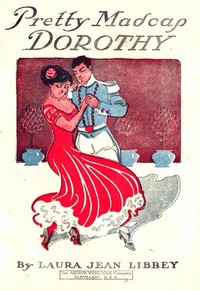
Pretty Madcap Dorothy; Or, How She Won a Lover — Inside the Classic
Fantasy Juvenile Worlds
70,505 recorded words. 10 minutes difference from this book's estimate.
View Gutenberg source #29776
The source record for Happy House — Inside the Classic measures this digital text at 68,185 words, 4 hr 57 min estimated reading time, and 9 detected text sections.
The text analysis averages about 15.5 words per sentence, while the detected sections provide another way to judge how the source is divided.
Project Gutenberg metadata also associates the work with “Family life -- Juvenile fiction,” connecting these edition facts with the source record’s subject description.
Explore this collection
These alternatives are selected using recorded categories and estimated reading time.
About 307 minutes
Fantasy Juvenile Worlds
70,505 recorded words. 10 minutes difference from this book's estimate.
View Gutenberg source #29776About 281 minutes
Fantasy Juvenile Worlds
64,521 recorded words. 16 minutes difference from this book's estimate.
View Gutenberg source #31773About 317 minutes
Fantasy Juvenile Worlds
72,908 recorded words. 20 minutes difference from this book's estimate.
View Gutenberg source #33985Search stored excerpts and compare books → Choose by your preferences →
Choices use stored catalog measurements. Estimates vary with reading speed. A shared category is a catalog label, not a claim that two books have the same argument or literary quality.
Search reads excerpt text stored with this catalog and links to its associated Gutenberg record. The connection is stored in the site database; this tool does not recheck that every excerpt is word-for-word identical to that external record. Excerpt search does not cover every chapter and does not verify historical publication dates.
Catalog snapshot checked: 2026-09-25. Coverage: 94 public books, 94 available source excerpts.
Read the complete public-domain text at its original source.
Read on Project GutenbergThe novel opens not with a house but with a bell—the library bell chiming the hour on a drowsy June day. Three recent graduates listen, and their conversation immediately establishes a tension between nostalgia and forward-looking ambition. One girl slams a trunk lid and frowns at visitors on the campus, calling it “sacred—just for us.” Another insists Commencement is “just the beginning,” pointing to a world “born out of the frightful war” that needs trained minds. This opening scene, set entirely in a dormitory room, introduces the central conflict: how to translate college ideals into postwar action. The dialogue is brisk, the characters distinct, and the mood both elegiac and determined.
The first chapter’s setting—a disordered room with a trunk at its center—gives way to a very different landscape. By the time Nancy, one of the three graduates, reaches Happy House, the library bell has been replaced by the sounds of a farm: growing things, hired men, and the practical rhythms of rural life. The shift is abrupt and deliberate. The opening’s abstract talk of “work for our trained minds” becomes concrete when Nancy encounters Peter, the hired man, who delivers a long, passionate speech about farming as science, art, and battle. He calls Mother Earth “worse than a Czar” and describes the farmer’s fight against her moods. Nancy, who had secretly judged him a slacker for not going to war, must revise her assumptions. The excerpt shows her learning that the “harder task” can be invisible to outsiders.
Peter’s monologue in the garden is the novel’s ideological heart. He argues that the government has neglected small farmers like Judson, who farm “just the way his grandfather did.” By running experiments on Judson’s land, Peter hopes to prove that scientific methods can double productivity—and then spread that knowledge. His vision is an army of “Peter Hydes” rescuing farmers, not with flags and bands, but with practical demonstrations. Nancy’s reaction is immediate: she feels remorse for her earlier judgment and calls his work “brave.” The scene is structured as a revelation, with Peter’s earnestness contrasting with Nancy’s earlier frivolity. Readers should note how the novel uses this conversation to reframe the meaning of service and heroism in a postwar context.
The excerpts rely heavily on dialogue to advance character and theme. The opening chapter’s three-way conversation establishes each speaker’s attitude toward the future. Later, Peter’s long speech is interrupted by Nancy’s interjections, creating a rhythm of exposition and reaction. The prose is plain but not flat; it uses specific details—the “fluffy dresses” of visitors, the “tender stalks of corn”—to ground abstract ideas. The novel’s structure appears episodic, with chapter titles like “The Letter,” “Happy House,” and “The Hired Man” signaling key encounters. Readers should pay attention to how each new character or setting adds a layer to Nancy’s education. The excerpts do not reveal the plot’s full arc, but they suggest a pattern of arrival, misunderstanding, and correction.
The provided text covers only the opening and a middle scene, so many elements remain unclear. The identity of “the Master” (a chapter title) is unknown. The letter that begins the story is not quoted. The relationship between Nancy and the other two graduates is sketched but not developed. The novel’s catalog subjects mention “family life” and “New England,” but the excerpts show no family members yet—only friends and a hired man. The war is referenced as a recent, transformative event, but its specific impact on the characters is hinted at rather than shown. Readers should approach the full text expecting gradual revelations: the house itself may hold secrets, and Peter’s background is likely more complex than his speech suggests. The excerpts are best read as a promise of deepening complexity.
The opening and middle excerpts of Happy House establish a clear pattern: a young woman leaves a familiar world, encounters a figure who challenges her assumptions, and begins to see hidden value in what she initially dismissed. The novel’s title suggests that the house itself will become a character, and the contrast between the dormitory’s “sacred” space and the farm’s demanding soil sets up a central tension. Readers who enjoy stories of personal growth through unexpected work—and who appreciate dialogue that carries ideological weight—will find this an engaging start. The full text likely rewards attention to how each new chapter adds a piece to Nancy’s education.
Sometimes I think of Happy House's heroine, learning that a home holds more secrets than comfort. It puts me in mind of another quiet volume, where a fatal error unfolds with the same patient certainty. Both books share that hush before understanding dawns, like dust settling on a windowsill. Death Makes a Mistake — Edition Insights rests beside it on my shelf, a familiar companion to that same ache of revelation.
Capture what you thought, learned, and would like to remember.