About 495 minutes
Gold — Story, Setting & Ideas
Adventure Picaresque Fiction
113,804 recorded words. 59 minutes difference from this book's estimate.
View Gutenberg source #30826
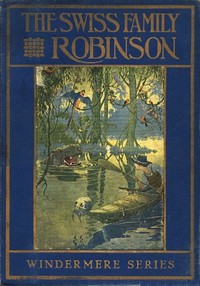
Before opening The Swiss Family Robinson; or, Adventures on a Desert Island — Themes and Context, the edition data offers a quick orientation: 127,341 words, 9 hr 14 min estimated reading time, and 12 detected text sections.
The text analysis averages about 24.6 words per sentence, while the detected sections provide another way to judge how the source is divided.
Project Gutenberg metadata also associates the work with “Islands -- Fiction,” connecting these edition facts with the source record’s subject description.
Explore this collection
These alternatives are selected using recorded categories and estimated reading time.
About 495 minutes
Adventure Picaresque Fiction
113,804 recorded words. 59 minutes difference from this book's estimate.
View Gutenberg source #30826About 635 minutes
Adventure Picaresque Fiction
146,018 recorded words. 81 minutes difference from this book's estimate.
View Gutenberg source #30954About 422 minutes
Adventure Picaresque Fiction
96,849 recorded words. 132 minutes difference from this book's estimate.
View Gutenberg source #34266Search stored excerpts and compare books → Choose by your preferences →
Choices use stored catalog measurements. Estimates vary with reading speed. A shared category is a catalog label, not a claim that two books have the same argument or literary quality.
Search reads excerpt text stored with this catalog and links to its associated Gutenberg record. The connection is stored in the site database; this tool does not recheck that every excerpt is word-for-word identical to that external record. Excerpt search does not cover every chapter and does not verify historical publication dates.
Catalog snapshot checked: 2026-09-25. Coverage: 94 public books, 94 available source excerpts.
Read the complete public-domain text at its original source.
Read on Project GutenbergThe father-narrator of The Swiss Family Robinson introduces himself not as a castaway but as a household manager. Within the first chapter, as the ship breaks apart, he organizes his family's escape with the same deliberate calm he later applies to building a tree house, taming an onager, or manufacturing felt flooring. The narrative voice is that of a Swiss patriarch who treats the desert island as an extension of his domestic sphere—a place to be inventoried, improved, and morally regulated.
This editorial note focuses on three patterns visible in the excerpts: the father's systematic approach to survival, the repeated motif of animal domestication as a family project, and the quiet tension between the boys' desire for adventure and the father's insistence on order. These elements, traceable to specific passages, shape the book's distinctive rhythm of crisis followed by methodical problem-solving.
The narrator's first instinct after landing is to take stock. He lists provisions, assigns tasks, and calculates distances. In the excerpt describing the salt-cave improvements, he records the process of leveling floors with clay, spreading gravel mixed with melted gypsum, and manufacturing felt from glue, isinglass, wool, and hair. The language is procedural: 'I spread out a large piece of sailcloth, and covered it equally all over with a strong liquid.' This is not a survival manual but a domestic ledger.
Even the anniversary of their deliverance prompts a plan: 'I resolved to set to-morrow apart as a day of thanksgiving.' The father frames gratitude as a scheduled event. His mind, he says, was 'full of indefinite plans'—yet the narrative never loses its grip on the concrete. Every discovery, from a salt deposit to a buffalo, becomes an entry in the family's expanding inventory of resources.
The naming of animals in the excerpts reveals how the family projects its own dynamics onto the creatures. Jack names his buffalo 'Storm' for its ferocity; Franz, recalling the story of Milo of Crotona, names his calf 'Grumble' after its low muttering. The father mediates these choices, assigning each animal to a child as a kind of moral stewardship. 'Who is to have charge of him?' he asks, turning a captured calf into a lesson in responsibility.
The scene is comic but also systematic: the mother gets the old gray donkey, Fritz the onager, Jack the buffalo and jackal, Ernest the monkey, and Franz the calf. The father remains 'superintendent-in-chief.' This distribution mirrors the family hierarchy and reinforces the father's role as the one who allocates resources and duties. The animals are not just pets but tools for character formation.
Despite the boys' enthusiasm—Jack boasts that 'Storm' beats his brother's name 'hollow'—the father consistently reins in their excitement. When Ernest prefers his monkey to a calf, the father does not object but redirects. When Franz hopes to ride his grown bull, the father smiles at 'the child's simplicity' and defers the plan: 'We will see about letting you mount him some day; but remember, he will be a great bull long before you are nearly a man.'
The narrative thus balances two impulses: the boys' appetite for the extraordinary (sharks, tigers, ostriches) and the father's insistence on the ordinary (carpentry, animal husbandry, record-keeping). The illustrations listed in the contents—'There stood Fritz with his gun to his shoulder pointing it at a huge shark'—promise adventure, but the text delivers it through the filter of paternal narration. The father never loses control of the story, even when the events are wild.
Readers approaching The Swiss Family Robinson expecting a straightforward survival tale will find instead a domestic novel in disguise. The island is a household; the animals are children; the father is the accountant of providence. Pay attention to the moments when the narrator pauses to describe a process—making felt, training a calf, planning a thanksgiving—because these are the scenes where the book's true subject emerges: the transformation of chaos into order through the relentless application of method.
Reading about the father’s gentle, methodical ordering of that island—how he tamed the wild into something familiar—left a quiet ache in me. It reminded me of another story’s soft pull, where buried treasure and a girl’s own unraveling feel less like adventure and more like a slow homecoming. That one lingers too, like an old photograph. Doubloons—and the Girl — Background and Themes holds a similar warmth.
Your answers remain private and are stored only in this browser.