About 262 minutes
The Lady of Loyalty House: A Novel — Key Ideas to Explore
Adventure Picaresque Fiction
60,112 recorded words. 3 minutes difference from this book's estimate.
View Gutenberg source #27929
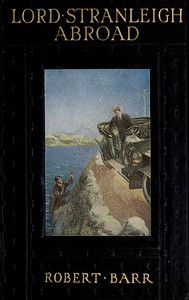
Lord Stranleigh Abroad — Reading Notes can be approached with a clearer sense of reading commitment from its source measurements: 60,879 words, 4 hr 25 min estimated reading time, and 7 detected text sections.
The text analysis averages about 14.7 words per sentence, while the detected sections provide another way to judge how the source is divided.
Project Gutenberg metadata also associates the work with “Nobility -- Great Britain -- Fiction,” connecting these edition facts with the source record’s subject description.
Explore this collection
These alternatives are selected using recorded categories and estimated reading time.
About 262 minutes
Adventure Picaresque Fiction
60,112 recorded words. 3 minutes difference from this book's estimate.
View Gutenberg source #27929About 188 minutes
Adventure Picaresque Fiction
43,038 recorded words. 77 minutes difference from this book's estimate.
View Gutenberg source #31836About 342 minutes
Adventure Picaresque Fiction
78,629 recorded words. 77 minutes difference from this book's estimate.
View Gutenberg source #33066Search stored excerpts and compare books → Choose by your preferences →
Choices use stored catalog measurements. Estimates vary with reading speed. A shared category is a catalog label, not a claim that two books have the same argument or literary quality.
Search reads excerpt text stored with this catalog and links to its associated Gutenberg record. The connection is stored in the site database; this tool does not recheck that every excerpt is word-for-word identical to that external record. Excerpt search does not cover every chapter and does not verify historical publication dates.
Catalog snapshot checked: 2026-09-25. Coverage: 94 public books, 94 available source excerpts.
Read the complete public-domain text at its original source.
Read on Project GutenbergThe novel opens with Edmund Trevelyan—later revealed as Lord Stranleigh—boarding the largest Atlantic liner of the era, dressed in impeccably cut tweed and trailed by a disapproving valet named Ponderby. The contrast between the valet’s disdain for American egalitarianism and his master’s easy nonchalance sets up a recurring tension between British formality and New World informality. Within moments, a fellow passenger recognizes Trevelyan, launching a plot that quickly moves from shipboard society to a rifle wound in the shoulder, treated by a capable young woman who insists on taking charge. The opening chapters establish a tone of polished adventure, where physical peril is met with witty dialogue and understated heroism.
The first chapter, “Lord Stranleigh all at Sea,” introduces the protagonist through his clothing and his valet’s silent commentary. The tweed suit is described as “well-fitting and distinguished,” marking him as a connoisseur’s ideal passenger. Ponderby’s “expressionless face” and internal grumbling about America’s lack of hierarchy provide a comic foil. The narrative voice is brisk, moving from the gangplank to a chance encounter that propels the story. The hot weather and the promise of a cool ocean voyage are undercut by a cablegram about New York’s sweltering heat—a small detail that hints at the discomfort awaiting the hero. This section establishes the novel’s interest in social observation and the friction between British reserve and American directness.
When Stranleigh appears at a rural house with a bullet through his shoulder, the dialogue shifts into a battle of wills. The young woman, Miss Armstrong, immediately takes command: “No exertion, please,” she says, and her mother brings warm water and dressings. Stranleigh’s attempt to return to Bleachers is met with firm refusal. Their exchange is laced with playful antagonism. She accuses him of “man’s distrust of a woman when it comes to serious work”; he counters that she is uncomplimentary. The bullet has passed clean through, a convenient plot device that allows the scene to focus on character rather than gore. The author uses the wound as a pretext for intimacy and banter, revealing Stranleigh’s politeness and the girl’s competence. The scene ends with her ordering him to the verandah, a small victory that signals her role in the story.
Ponderby, the valet, appears only briefly but leaves a distinct impression. His “dislike to ocean travel” and disapproval of America—a country where “all men are free and equal”—mark him as a conservative voice. The narrator notes that Ponderby “knew he had no equal,” a dry joke at the expense of British class consciousness. Though he speaks only when ordered, his silent judgments color the opening. He is a reminder of the social structures Stranleigh carries with him, even as the hero adapts to American circumstances. The valet’s presence also underscores the protagonist’s wealth and status: a man who travels with a suite of rooms and a servant who expects to wait on nobility. This detail enriches the reading experience by grounding the adventure in a specific social milieu.
The excerpts reveal a preference for dialogue over description. Action is conveyed through speech: the wound is discussed, not shown; the ship’s departure is implied. The prose is efficient, with short paragraphs and frequent line breaks. The author uses dialogue to advance the plot and reveal character, as when Miss Armstrong says, “I shall have to hurt you a little,” and Stranleigh replies, “It is all for my good, as they say to little boys before whipping them.” This exchange balances tension with humor. The narrative rarely lingers on setting; instead, it trusts the reader to infer atmosphere from dialogue and action. Readers should expect a fast-moving story where conversations carry the weight of exposition and conflict.
The excerpts offer a clear sense of the novel’s tone: urbane, slightly ironic, and fond of verbal sparring. Stranleigh is a gentleman adventurer whose composure is tested by American circumstances. Readers who enjoy early twentieth-century adventure fiction with a comic edge will find this work engaging. Pay attention to the way the author uses minor characters—like the valet and the mother—to comment on the main action. The story moves quickly, so the opening chapters reward careful reading for the clues they plant about later developments.
That rainy afternoon, Lord Stranleigh Abroad kept me company, its breezy banter and rifle-shot scrapes a pleasant hum against the windowpane. Yet afterward, I found my mind lingering not on the heroics but on that untraveled space between his charm and his danger. Somewhere in that pause, I reached for The Door into Infinity — A Closer Reading, and the room grew quieter still.
Create a short personal record of your experience with this book.