About 265 minutes
Lord Stranleigh Abroad — Reading Notes
Adventure Picaresque Fiction
60,879 recorded words. 3 minutes difference from this book's estimate.
View Gutenberg source #32185
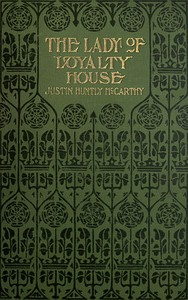
Before opening The Lady of Loyalty House: A Novel — Key Ideas to Explore, the edition data offers a quick orientation: 60,112 words, 4 hr 22 min estimated reading time, and 7 detected text sections.
The text analysis averages about 15.6 words per sentence, while the detected sections provide another way to judge how the source is divided.
Project Gutenberg metadata also associates the work with “Love stories,” connecting these edition facts with the source record’s subject description.
Explore this collection
These alternatives are selected using recorded categories and estimated reading time.
About 265 minutes
Adventure Picaresque Fiction
60,879 recorded words. 3 minutes difference from this book's estimate.
View Gutenberg source #32185About 188 minutes
Adventure Picaresque Fiction
43,038 recorded words. 74 minutes difference from this book's estimate.
View Gutenberg source #31836About 342 minutes
Adventure Picaresque Fiction
78,629 recorded words. 80 minutes difference from this book's estimate.
View Gutenberg source #33066Search stored excerpts and compare books → Choose by your preferences →
Choices use stored catalog measurements. Estimates vary with reading speed. A shared category is a catalog label, not a claim that two books have the same argument or literary quality.
Search reads excerpt text stored with this catalog and links to its associated Gutenberg record. The connection is stored in the site database; this tool does not recheck that every excerpt is word-for-word identical to that external record. Excerpt search does not cover every chapter and does not verify historical publication dates.
Catalog snapshot checked: 2026-09-25. Coverage: 94 public books, 94 available source excerpts.
Read the complete public-domain text at its original source.
Read on Project GutenbergThe prologue introduces a man returning from overseas who adapts his appearance to the changing times: he exchanges his 'southern-colored garments, over-blue, over-red, over-yellow' for 'sombre gray surcharged with solemn black.' This visual transformation—from seafarer to Puritan—signals McCarthy's interest in costume as a marker of allegiance and identity. The narrator's wry tone, calling him a 'translated man, if not a changed man,' suggests the novel will treat its historical setting with ironic detachment rather than solemn reverence.
McCarthy's diction often borrows from the stage. The heroine Brilliana addresses a suitor as 'Chivalry' and he responds by calling her 'enchantress' and vowing to 'fly' at her command. The scene reads like a comedy of manners, complete with 'sundry strange scrapings' and 'grotesquely languishing' gestures. The author's dedication poem admits the tale is 'a vagrant tale' that 'History denies,' framing the narrative as a deliberate fiction. This self-awareness extends to the characters: Halfman, a former pirate, 'jigged' with delight at the 'lawless comedy' being staged. The novel does not pretend to be a faithful historical record but rather a playful, theatrical romance.
Brilliana's speech is marked by strategic flattery and veiled commands. She tells Master Paul, 'Bravely said, Chivalry!' and promises a kiss 'as the prize of your triumph.' To Master Peter she declares, 'I will hearken to none but a King’s man,' prompting his immediate conversion. Her language is performative: she 'baits the hook' and speaks of 'angling' for reluctant donors. McCarthy uses fishing metaphors to underscore her manipulative skill. The narrator notes that Halfman 'had not been so happy since his return to England' as when watching this 'fair maid’s strategy.' The dialogue reveals a heroine who wields words as weapons, coaxing and commanding with equal ease.
McCarthy describes characters through vivid, often unflattering physical comparisons. Master Peter Rainham is likened to 'a boar’s head on an ale-house sign,' with 'little, angry eyes' and 'assertive, yellow teeth.' Halfman's 'wolf look' suggests latent violence. In contrast, Brilliana is associated with laughter and light: 'the laughter in her eyes seeking and finding the laughter in his.' The prologue's shift from 'over-blue, over-red, over-yellow' to 'sombre gray' establishes a pattern of color symbolism that recurs in the excerpts. These visual details serve as shorthand for moral and political alignment, with the Puritan gray associated with concealment and the Cavalier colors with flamboyance.
The table of contents reveals a symmetrical structure: a prologue, thirty-one chapters, and an epilogue. Early chapters like 'The Leaguer of Harby' and 'How the Siege was Raised' suggest a military plot, but the excerpts focus on domestic intrigue. The siege appears to be a backdrop for Brilliana's schemes to extract money from wealthy suitors. Chapter titles such as 'Set a Knave To Catch a Knave' and 'A High Court of Justice' hint at legal or moral reckonings. The epilogue suggests closure, but the excerpts do not reveal the outcome. McCarthy balances the physical siege with a comedic 'siege' of persuasion, using parallel structures to unite the two conflicts.
Readers attentive to McCarthy's diction will notice how he uses theatrical language to blur the line between sincerity and performance. Brilliana's commands—'Let it be done, and well done, ere dusk'—echo the urgency of wartime while remaining firmly within the realm of social comedy. The novel rewards those who track its visual motifs and verbal play, offering a romance that winks at its own historical liberties.
Reading about the heroine’s staged deceptions, I remembered how my grandmother used to hide her own small strategems behind a teacup’s rim. That same tender, performative distance fills my old copy of The Lady of Loyalty House, and yet Better than Play — Reading Companion once made me feel it too—as if we were both just watching our lives from a lit stage, waiting for the curtain to soften. I keep that feeling close now, like a folded program from a forgotten matinee.
Use these questions to collect your thoughts before moving on.