About 554 minutes
The Swiss Family Robinson; or, Adventures on a Desert Island — Themes and Context
Adventure Picaresque Fiction
127,341 recorded words. 59 minutes difference from this book's estimate.
View Gutenberg source #34808
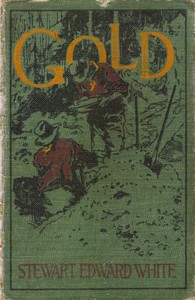
Before opening Gold — Story, Setting & Ideas, the edition data offers a quick orientation: 113,804 words, 8 hr 15 min estimated reading time, and 11 detected text sections.
The text analysis averages about 14.6 words per sentence, while the detected sections provide another way to judge how the source is divided.
Project Gutenberg metadata also associates the work with “Western stories,” connecting these edition facts with the source record’s subject description.
Explore this collection
These alternatives are selected using recorded categories and estimated reading time.
About 554 minutes
Adventure Picaresque Fiction
127,341 recorded words. 59 minutes difference from this book's estimate.
View Gutenberg source #34808About 422 minutes
Adventure Picaresque Fiction
96,849 recorded words. 73 minutes difference from this book's estimate.
View Gutenberg source #34266About 418 minutes
Adventure Picaresque Fiction
96,011 recorded words. 77 minutes difference from this book's estimate.
View Gutenberg source #33634Search stored excerpts and compare books → Choose by your preferences →
Choices use stored catalog measurements. Estimates vary with reading speed. A shared category is a catalog label, not a claim that two books have the same argument or literary quality.
Search reads excerpt text stored with this catalog and links to its associated Gutenberg record. The connection is stored in the site database; this tool does not recheck that every excerpt is word-for-word identical to that external record. Excerpt search does not cover every chapter and does not verify historical publication dates.
Catalog snapshot checked: 2026-09-25. Coverage: 94 public books, 94 available source excerpts.
Read the complete public-domain text at its original source.
Read on Project GutenbergThe narrator of Gold introduces himself as a man who has ended up a bookkeeper, a confession that shapes the entire account. He admits that his own temperament and the events themselves prevented his youthful dreams from being fulfilled, yet he positions his subordinate role as an advantage: it made him a better spectator. This self-awareness sets the tone for a narrative that is less about heroic triumph and more about the practical, often tense, realities of a mining community.
The story opens with a journey to Panama, then to California, but the focus quickly narrows to the daily routines and decisions of a small group of miners. The narrator’s voice is matter-of-fact, even when describing violence or danger, and he frequently notes the economic and logistical trade-offs that define their existence.
The narrator’s opening paragraph is a rare moment of self-focus, and he immediately undercuts it: “Which is a longer paragraph about myself than I had purposed writing.” This reluctance to claim importance persists throughout the excerpts. He describes himself as a “mere bookkeeper” and attributes his role to “lacks and reservations” of character. This self-deprecation is not false modesty but a structural choice. By stepping back, he foregrounds the actions of others—the miners, the hunters, the leaders like Bagsby—while retaining the authority of an eyewitness. His observations are precise: he notes the number of men at the cradle, the division of labor, the economic cost of security. The voice is that of a chronicler, not a hero, which lends credibility to the details he records.
A recurring tension in the excerpts is the conflict between productivity and safety. When Bagsby insists on posting guards and limiting the number of men working the cradles, the narrator objects: “Four men out of nine working.” Johnny complains that “here’s more gold than a hundred men could begin to handle, and we’re wasting more than half our resources.” The dialogue reveals a constant calculation: how to balance the need for food (hunting), the risk of attack, and the desire for gold. Yank’s slow philosophy offers a compromise: “We can put in longer hours because we rest oftener.” These exchanges are not abstract; they drive the plot. The decision to move the cradles, made reluctantly, leads directly to the Indian attack. White uses the narrator’s bookkeeping mindset to highlight the inefficiency and danger inherent in the miners’ enterprise.
The dialogue in the excerpts is terse and idiomatic, revealing character through speech patterns. Bagsby speaks in a dialect marked by contractions and dropped consonants: “Thar ought to be two men in camp,” and “Ye’re paying me money for.” His warnings are grim and prophetic: “You-all forgit this is a self-supportin’ community.” In contrast, the narrator’s speech is more standard, reflecting his role as observer. The exchange over the move to the new ravine shows the group’s decision-making process: objections, grumbling, and eventual acquiescence. When the attack comes, the dialogue shifts to short, urgent commands: “Come on! Let’s get out of this!” The shift from reasoned debate to panicked action underscores the sudden violence that disrupts their routine.
The attack sequence is the most dramatic passage in the excerpts, and White builds it with careful pacing. Buck Barry’s near-miss—an arrow draws blood from his ear—is followed by a swift, brutal retaliation: “With a roar of anger Buck Barry raised his pickaxe and charged into the bush.” The narrator then hears “a series of whoops and two shots” from camp. The description of the Indians advancing is stark: “a crowd of Indians coming up the valley at full speed. Most of them were on horseback, but a number loped along on foot.” The narrator and his companions take refuge in a clump of willows, rifles ready. The passage ends with the sound of horses’ hooves, the threat still imminent. White does not moralize or elaborate; the violence is presented as a fact of life, a sudden rupture in the daily grind of mining.
Readers should attend to the narrator’s limited perspective. He is not omniscient; he reports only what he sees and hears, and he admits his own shortcomings. This makes the account feel immediate but also incomplete. The excerpts suggest a story that values practical detail over dramatic flourish, where the real drama lies in the choices the men make about work, risk, and survival. The book’s structure—moving from Panama to the mines to San Francisco—hints at a broader arc, but the heart of the narrative is the day-to-day life of the camp.
Sometimes a book stays with you less for what it says than for what it quietly withholds—that bookkeeper’s voice kept circling his own limits, and I found myself doing the same. It reminded me of how The Door into Infinity — A Closer Reading lingers: not answering, just leaving a certain hush behind, like a door left ajar in memory.
Build a private reading journal entry for this title.