About 188 minutes
A Romance in Transit — A Reader’s Guide
Historical Psychological Social Fiction
43,082 recorded words. 4 minutes difference from this book's estimate.
View Gutenberg source #33399
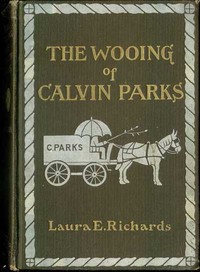
Before opening The Wooing of Calvin Parks — Inside the Classic, the edition data offers a quick orientation: 42,289 words, 3 hr 4 min estimated reading time, and 6 detected text sections.
The text analysis averages about 11.7 words per sentence, while the detected sections provide another way to judge how the source is divided.
Project Gutenberg metadata also associates the work with “Mate selection -- Fiction,” connecting these edition facts with the source record’s subject description.
Explore this collection
These alternatives are selected using recorded categories and estimated reading time.
About 188 minutes
Historical Psychological Social Fiction
43,082 recorded words. 4 minutes difference from this book's estimate.
View Gutenberg source #33399About 189 minutes
Historical Psychological Social Fiction
43,326 recorded words. 5 minutes difference from this book's estimate.
View Gutenberg source #30439About 209 minutes
Historical Psychological Social Fiction
47,880 recorded words. 25 minutes difference from this book's estimate.
View Gutenberg source #28492Search stored excerpts and compare books → Choose by your preferences →
Choices use stored catalog measurements. Estimates vary with reading speed. A shared category is a catalog label, not a claim that two books have the same argument or literary quality.
Search reads excerpt text stored with this catalog and links to its associated Gutenberg record. The connection is stored in the site database; this tool does not recheck that every excerpt is word-for-word identical to that external record. Excerpt search does not cover every chapter and does not verify historical publication dates.
Catalog snapshot checked: 2026-09-25. Coverage: 94 public books, 94 available source excerpts.
Read the complete public-domain text at its original source.
Read on Project GutenbergThe novel opens with Calvin Parks pulling up to a yellow house he remembers from years past, noting its "pumpkin-color" and "well-sweep." The house is personified—windows of "cheerful inquiry" and a door "that came as near smiling as a door can." This anthropomorphic warmth extends to a vast dog that sniffs Calvin's trousers approvingly. Calvin's voice is colloquial and self-deprecating: he mutters about needing a "rope and tayckle" to get out of his wagon. The scene establishes a tone of gentle, observant humor rooted in domestic detail.
The candy route is not merely a job but a stage for Calvin's ethics and the community's dynamics. In a debate with Mr. Cheeseman, Calvin defends giving candy to a penniless child: "She's a child, and she wants a stick of candy; that's what I'm there for." Mr. Cheeseman retorts with a practical question: "Are you runnin' a candy route, or an orphan asylum?" This exchange reveals Calvin's soft heart and the tension between commerce and kindness. The candy itself is described with specificity—cinnamon drops, chocolate-coated lobster loaf, chicken bones with peanut butter, gum drops for toothless elders. Each item carries social meaning: gum drops are for "old folks," while fancy truck suits Christmas. Calvin's inventory becomes a map of his customers' needs and desires.
A subplot involving a white elephant candy illustrates the novel's attention to small dramas. Lonzo, a tearful helper, wants the elephant he was promised for cleaning dishes, but the pretty girl refuses, offering a broken one instead. Lonzo sobs, "I don't want to eat it! I want to love it a spell fust." Mr. Cheeseman mediates, and Calvin follows him to the show-window, where the elephant stands "fully a foot high" with tusks of "clear barley sugar." The scene balances pathos and absurdity: a grown man crying over a candy elephant, yet the desire to "love it a spell" is treated with respect. The negotiation over the elephant—its broken leg saved for eating—shows how value is negotiated between sentiment and utility.
The dialogue is rich with regional idiom and rhythm. Calvin says "I'm blowed if that ain't the house" and describes his horse as "who so peart." Mr. Cheeseman uses metaphors like "driven his nail home" and "put away his hammer" to signal a settled argument. The setting is evoked through specific details: a flagstone path, a barnyard with willows, a door-step with a vast dog. The catalog subject "Maine — Social life and customs" is borne out by these textures, but the excerpts show customs filtered through trade and neighborly negotiation rather than broad social panorama. The novel's psychological interest lies in Calvin's inner conflict between generosity and business sense, not in grand romantic gestures.
Readers should attend to the way Richards uses material objects—candy, wagons, houses—to externalize character and conflict. The excerpts offer no complete romantic plot, but the title's "wooing" may unfold through Calvin's interactions with the community. The candy route itself becomes a form of courtship, a series of small exchanges that build trust and affection. Approach the novel as a study in local custom and quiet humor, where a white elephant can matter as much as a marriage proposal.
I kept thinking about Calvin Parks after closing the book, how his candy route made every porch feel like a home. There's something similar in The Spy in Black — Reading Notes—that quiet sense of watching people arrange their lives around small rituals. It lingered the way a familiar scent does, soft and unasked for.
Save your reaction, strongest insight, and memorable passage.