About 868 minutes
John Marchmont's Legacy, Volumes 1-3 — Story, Setting & Ideas
Historical Psychological Social Fiction
199,449 recorded words. 31 minutes difference from this book's estimate.
View Gutenberg source #34542
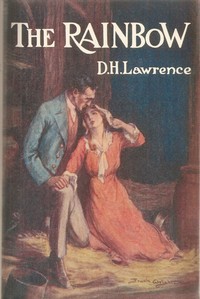
For The Rainbow — Context and Discussion, the stored edition analysis reports 192,438 words, 13 hr 57 min estimated reading time, and 21 detected text sections.
The text analysis averages about 13.2 words per sentence, while the detected sections provide another way to judge how the source is divided.
Project Gutenberg metadata also associates the work with “Domestic fiction,” connecting these edition facts with the source record’s subject description.
Explore this collection
These alternatives are selected using recorded categories and estimated reading time.
About 868 minutes
Historical Psychological Social Fiction
199,449 recorded words. 31 minutes difference from this book's estimate.
View Gutenberg source #34542About 882 minutes
Historical Psychological Social Fiction
202,747 recorded words. 45 minutes difference from this book's estimate.
View Gutenberg source #33082About 887 minutes
Historical Psychological Social Fiction
203,827 recorded words. 50 minutes difference from this book's estimate.
View Gutenberg source #33798Search stored excerpts and compare books → Choose by your preferences →
Choices use stored catalog measurements. Estimates vary with reading speed. A shared category is a catalog label, not a claim that two books have the same argument or literary quality.
Search reads excerpt text stored with this catalog and links to its associated Gutenberg record. The connection is stored in the site database; this tool does not recheck that every excerpt is word-for-word identical to that external record. Excerpt search does not cover every chapter and does not verify historical publication dates.
Catalog snapshot checked: 2026-09-25. Coverage: 94 public books, 94 available source excerpts.
Read the complete public-domain text at its original source.
Read on Project GutenbergThe opening of The Rainbow establishes a landscape defined by horizontality and distance: the Brangwens work in meadows where the Erewash twists 'sluggishly through alder trees,' and whenever they lift their heads they see the church-tower at Ilkeston 'in the empty sky.' This vertical marker—something 'standing above him and beyond him'—introduces a tension between the immediate, physical world of the farm and an unnamed expectancy. The Brangwens are described as having 'the look of an inheritor,' yet their eyes hold 'a look…as if they were expecting something unknown.' The prose itself moves between concrete details—the 'blue, lit-up laughter' shifting to 'hard blue-staring anger'—and a broader, almost mythic sense of cyclical life: 'the rush of the sap in spring, they knew the wave which cannot halt.'
The novel’s first chapter introduces a community whose relationship to the land is both intimate and unsettled. The Brangwens work 'hard because of the life that was in them, not for want of the money,' yet they are also 'aware of the last halfpenny' and do not waste apple peelings. This blend of instinctive thrift and natural abundance creates a steady, almost ritualistic rhythm. But the narrative repeatedly undercuts that stability with a sense of waiting. The Brangwens have 'that air of readiness for what would come to them, a kind of surety, an expectancy.' The church-tower, visible from the fields, functions as a fixed point in the landscape, but it also suggests something beyond the horizontal—a vertical axis of aspiration or unease. Lawrence’s description of the sky ‘when the weather is changing’ mirrors the emotional shifts in the characters’ eyes, linking inner states to the natural world without reducing one to the other.
In the later excerpt featuring Ursula and her grandmother Lydia, small objects carry heavy emotional and historical weight. Ursula brings a ‘tight little nosegay of pinks,’ and the grandmother immediately connects it to her Polish past: ‘That is how the peasants tied them at home…they make wreaths for their hair.’ The nosegay becomes a bridge between generations and countries. Similarly, the two wedding rings on Lydia’s finger prompt a quiet revelation: one ring belonged to Tom Brangwen, the other to her first husband, a Polish doctor who died at thirty-four. Ursula learns that she has ‘his brows’ and dark eyes, and she ‘at once identified herself with her Polish grandfather.’ The grandmother’s memory of Lensky is laced with resentment—‘He incorporated her in his ideas as if she were not a person herself’—showing how inheritance is not simply passed down but contested, felt as both connection and burden. The scene’s power lies in its restraint: the child’s shy pride, the grandmother’s measured words, and the tea tray set for two with a special green and gold cup.
One of the most striking details in the excerpt is the presence of Tilly, the servant who ‘preserved the spirit of Tom Brangwen, who was dead, in the Marsh.’ Ursula ‘always connected her with her grandfather,’ yet Tilly’s dialogue is distinctly her own: ‘My word, that’s a bobby-dazzlin’ posy you’ve brought!’ Her earthy, regional speech contrasts with the grandmother’s more formal, slightly accented English, creating a layered soundscape. The dead are not absent; they inhabit objects, gestures, and even other people’s voices. Lydia still feels ‘under his domination’ when she thinks of Lensky, though he has been dead for decades. The narrative does not resolve these tensions—between English and Polish, between the living and the dead, between the farm’s cyclical time and the characters’ linear, expectant lives. Instead, it lets them coexist, much like the two rings on one finger.
Readers will find that The Rainbow rewards attention to its smallest details: a nosegay, a ring, a turn of phrase. Lawrence’s prose moves between the concrete and the visionary without losing its grip on the physical world. The novel’s structure—following three generations—invites comparison across chapters, but each scene also stands on its own, dense with implication. Approach the text as a series of vivid, often unsettling encounters between people and the landscapes they inhabit, inherit, and resist.
I keep thinking about that Lawrence world—how the Marsh Farm’s quiet earth holds people’s restless hearts. It reminds me of a collection I stumbled on, The raid of the guerilla, and other stories — Themes and Context, where similar longings press against rough landscapes. That ache of belonging somewhere yet never quite fitting—it lingers, doesn’t it, like a field after rain.
Your answers remain private and are stored only in this browser.