About 329 minutes
Leonore Stubbs — Reading Notes
Historical Psychological Social Fiction
75,551 recorded words. 6 minutes difference from this book's estimate.
View Gutenberg source #31943
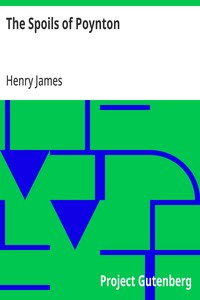
The source record for The Spoils of Poynton — Story, Setting & Ideas measures this digital text at 74,156 words, 5 hr 23 min estimated reading time, and 6 detected text sections.
The text analysis averages about 17.3 words per sentence, while the detected sections provide another way to judge how the source is divided.
Project Gutenberg metadata also associates the work with “Inheritance and succession -- Fiction,” connecting these edition facts with the source record’s subject description.
Explore this collection
These alternatives are selected using recorded categories and estimated reading time.
About 329 minutes
Historical Psychological Social Fiction
75,551 recorded words. 6 minutes difference from this book's estimate.
View Gutenberg source #31943About 329 minutes
Historical Psychological Social Fiction
75,611 recorded words. 6 minutes difference from this book's estimate.
View Gutenberg source #33657About 315 minutes
Historical Psychological Social Fiction
72,444 recorded words. 8 minutes difference from this book's estimate.
View Gutenberg source #34427Search stored excerpts and compare books → Choose by your preferences →
Choices use stored catalog measurements. Estimates vary with reading speed. A shared category is a catalog label, not a claim that two books have the same argument or literary quality.
Search reads excerpt text stored with this catalog and links to its associated Gutenberg record. The connection is stored in the site database; this tool does not recheck that every excerpt is word-for-word identical to that external record. Excerpt search does not cover every chapter and does not verify historical publication dates.
Catalog snapshot checked: 2026-09-25. Coverage: 94 public books, 94 available source excerpts.
Read the complete public-domain text at its original source.
Read on Project GutenbergThe opening pages of The Spoils of Poynton introduce a narrator who treats aesthetic judgment as a form of moral and social combat. Mrs. Gereth, the widow at the story's center, is shown suffering from the 'æsthetic misery' of Waterbath, a house whose decorations she finds imbecilic. Her irritation is not mere snobbery but a visceral reaction: she has been kept awake by the wallpaper. The prose, dense with irony and qualification, tracks her every perception as a skirmish in a larger war over taste and possession.
What the excerpts offer is not a plot summary but a sustained demonstration of how James renders consciousness. Mrs. Gereth's mind moves from the 'horrible stamp' of the other women's smartness to the 'fine hint of nature' that the grounds ought to have followed. The novel's famous 'spoils'—the art and furniture of Poynton—are never described in inventory; instead, they exist as a magnetic absence, felt through the characters' reactions to their threatened loss.
The excerpts show that taste in this novel is not a gentle preference but a weapon. Mrs. Gereth 'would rather have perished than have looked endimanchée'; the French word, meaning dressed up in Sunday best, carries a class judgment that is both precise and cruel. The narrator reports that she 'had no imagination about anybody's life save on the side she bumped against'—a striking image of collision rather than sympathy. Fleda Vetch, the younger woman, is praised for knowing 'the marks' by direct inspiration, but this knowledge brings her no peace; she 'had hours, now, of sombre wishing that she might never see anything good again.' The novel's aesthetic education is presented as a form of damage.
The catalog subjects list 'inheritance and succession' and 'domestic fiction,' but the excerpts reveal a struggle that is anything but domestic in the cozy sense. Mrs. Gereth's son Owen is to inherit Poynton, and his impending marriage to Mona Brigstock threatens to transfer the house's treasures to a woman whose family owns Waterbath—that temple of ugliness. The conflict is conducted through newspapers, letters, and loaded silences. Mrs. Gereth 'almost taunted Fleda with supineness in not getting something out of somebody,' treating social intelligence as a form of espionage. The 'spoils' are never listed; they are felt as a pressure on every conversation.
One of the most curious notes in the excerpts is Fleda's longing for 'nice strong horrors in West Kensington'—a wish to escape into vulgarity. The novel does not simply oppose good taste to bad; it suggests that aesthetic refinement can be a trap. Fleda reflects that 'she would be more at peace in some vulgar little place that should owe its cachet to Tottenham Court Road.' The word 'cachet' (stamp, seal) echoes the earlier 'horrible stamp' of the grocer's wife's smartness. The text is full of such echoes, creating a pattern in which the language of commerce and class marking pervades even the most private thoughts.
Readers coming to The Spoils of Poynton should attend less to the fate of the furniture than to the way James builds a world from the friction between what characters see and what they say. The excerpts offer no resolution, only a series of tactical engagements. The novel's tension lies not in whether the spoils will be saved but in what the fight does to those who wage it.
That rainy afternoon, I kept returning to the fierce quiet of The Spoils of Poynton, how a chintz chair could wound more than a shout. Later, restless, I picked up Cynthia's Chauffeur — Reading Companion, and found myself smiling at its lighter, swifter air—the same tension between possession and freedom, but softened by sunlight, as if the rain had finally lifted.
Build a private reading journal entry for this title.