About 450 minutes
The New Warden — Story, Setting & Ideas
Historical Psychological Social Fiction
103,436 recorded words. 1 minutes difference from this book's estimate.
View Gutenberg source #32388
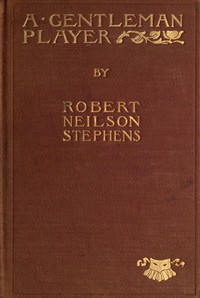
Before opening A Gentleman Player; His Adventures on a Secret Mission for Queen Elizabeth — A Reader’s Guide, the edition data offers a quick orientation: 103,643 words, 7 hr 31 min estimated reading time, and 13 detected text sections.
The text analysis averages about 18.4 words per sentence, while the detected sections provide another way to judge how the source is divided.
Project Gutenberg metadata also associates the work with “Historical fiction,” connecting these edition facts with the source record’s subject description.
Explore this collection
These alternatives are selected using recorded categories and estimated reading time.
About 450 minutes
Historical Psychological Social Fiction
103,436 recorded words. 1 minutes difference from this book's estimate.
View Gutenberg source #32388About 453 minutes
Historical Psychological Social Fiction
104,073 recorded words. 2 minutes difference from this book's estimate.
View Gutenberg source #32432About 445 minutes
Historical Psychological Social Fiction
102,225 recorded words. 6 minutes difference from this book's estimate.
View Gutenberg source #32924Search stored excerpts and compare books → Choose by your preferences →
Choices use stored catalog measurements. Estimates vary with reading speed. A shared category is a catalog label, not a claim that two books have the same argument or literary quality.
Search reads excerpt text stored with this catalog and links to its associated Gutenberg record. The connection is stored in the site database; this tool does not recheck that every excerpt is word-for-word identical to that external record. Excerpt search does not cover every chapter and does not verify historical publication dates.
Catalog snapshot checked: 2026-09-25. Coverage: 94 public books, 94 available source excerpts.
Read the complete public-domain text at its original source.
Read on Project GutenbergThe novel opens with a precise temporal and spatial anchor: three o'clock on the first Monday in March 1601, at the Globe Theatre on the Bankside. The red flag and three trumpet blasts signal the start of a performance—the first of Hamlet. This theatrical setting is not merely decorative; it establishes a motif of performance and disguise that pervades the narrative. The protagonist, Harry Marryott, is a player, and his subsequent secret mission for Queen Elizabeth requires him to act a part. The structure of the novel mirrors this theme, moving from the public stage of the Globe to the private dramas of taverns, coaches, and country houses.
The first chapter grounds the reader in a specific historical moment—the premiere of Hamlet—and uses the theatre as a microcosm of Elizabethan society. The description of the Globe as a round, partly roofless wooden building with a brick foundation and encircling ditch is precise, evoking the physical reality of the playhouse. The flag and trumpet are not just signals but symbols of the public nature of performance. This opening scene establishes a pattern: the novel frequently returns to moments of spectacle or display, whether in the taverns where players gather or in the coach where Anne Hazlehurst becomes a silent performer for her captors. The historical setting is not merely backdrop but an active force, shaping the characters' choices and the novel's pacing.
A central section of the excerpt details a coach journey, which becomes a mobile stage for power struggles and silent communication. The coach is divided into zones: the forward part where Anne moves to face backward, the side where Captain Rumney rides, and the rear where Anthony Underhill is forced to fall back. The narrative tracks glances, half-smiles, and the direction of gazes with almost choreographic precision. Anne's eyes become a focal point, described as holding 'the light of a new hope' and later as 'intentionally lacking definite expression.' The coach journey is structured around stops—at Rotherham, Barnesley—that punctuate the tension. The movement between scenes is not merely geographical but psychological, as alliances shift and threats emerge from within the traveling party.
Stephens repeatedly uses the imagery of masks and impassivity. Harry Marryott 'hardened his face to the impassibility of a mask,' a phrase that echoes the player's craft. Anne's eyes are described as 'unfathomable,' and her deliberate lack of expression becomes a weapon. The novel's title, A Gentleman Player, encapsulates this duality: the protagonist must be both a gentleman (with honor and duty) and a player (one who performs roles). The recurring image of the mask is tied to the structure of the narrative, which often withholds characters' inner thoughts, forcing the reader to interpret actions and glances. This technique creates a sense of constant performance, where every gesture may be calculated and every silence significant.
The excerpt reveals a delicate balance of power within the traveling group. Captain Rumney's insolence and his usurpation of Anthony's place behind the coach signal a brewing conflict. Harry's decision to yield—'My commands were too narrow'—is a tactical retreat, but it comes at a cost: the 'bitter moment' of failing to support his own man. The narrative tracks the subtle shifts in loyalty: Anne's gaze turns to Rumney as a potential ally, while Anthony's earthward look avoids reproach. The structure of the journey, with its halts and changes in seating, mirrors the instability of the alliances. The threat of betrayal is not external but internal, lurking within the coach's confined space. This tension is sustained through the careful management of physical proximity and eye contact, making the journey a microcosm of the larger political intrigue.
Readers attentive to the novel's structure will find that the journey scenes, with their meticulous attention to spatial relationships and silent communication, are the narrative's engine. The theatrical opening is not a one-off flourish but a key to understanding how the novel uses performance, disguise, and surveillance. The recurring image of the mask—whether literal or figurative—invites a reading that questions the stability of identity in a world of shifting allegiances. The novel rewards those who watch the characters' eyes and note the positions of horses and coaches as closely as the dialogue.
Reading the coach journey in A Gentleman Player, that jostling sense of shared secrets under grey Elizabethan skies, drifted me back to Mary Elizabeth Braddon’s quieter, thornier landscapes. Both stories carry passengers with hidden purposes, yet hers unfold indoors, in half-lit rooms where legacies breathe. It was a strange comfort, recalling John Marchmont's Legacy, Volumes 1-3 — Story, Setting & Ideas, thinking how movement and stillness can both unsettle us.
Build a private reading journal entry for this title.